AseptiScope Reports Groundswell of Interest Following Study Linking The DiskCover System to Reducing Deadly Infections

Findings in publication highlight plummeting hospital bloodstream infections, implying $1.5 billion in annual healthcare savings if implemented.

SAN DIEGO, Calif., October 21, 2026 — AseptiScope, Inc. reports a groundswell of interest in The DiskCover System following publication of a study in Critical Care Nurse documenting an 84% reduction in central line-associated bloodstream infection (CLABSI) rates during a quality improvement initiative at the Lt. Col. Luke Weathers, Jr. VA Medical Center in Memphis, Tennessee.

The independently conducted study followed 5,226 intensive care patients over four years.  Following the integration of stethoscope hygiene with The DiskCover System into an intensive care infection prevention “bundle”, infection rates dropped by 84%, with zero infections sustained throughout the final year of the study.

Growing Interest in The DiskCover System

Since the study’s publication on October 1, AseptiScope has experienced a spike in product requests and technical demonstrations, reflecting the high priority hospitals place on preventing CLABSIs.

The publication has focused new attention on the highly contaminated stethoscope as a significant gap in patient safety, especially in settings where patients are particularly vulnerable to healthcare-associated infections (HAI).

For AseptiScope, the growing interest reflects an important shift in the conversation around stethoscope hygiene: from recognizing contaminated stethoscopes as a potential source of pathogen exposure to considering how aseptic stethoscope barriers can be incorporated into routine patient care.

The human toll of preventable infections

“A central line-associated bloodstream infection can have devastating consequences, from prolonged hospital stays to loss of life,” said Cynthia Cadwell, MSN, RN, ANP-BC, CNS, CPHQ, Clinical Nurse Specialist and Healthcare Quality Consultant. “These events also take a toll on the nurses dedicated to protecting patients, contributing to moral distress, burnout, and diminished confidence in their ability to keep patients safe. That’s why innovations like The DiskCover System matter. If we can make everyday practices, such as using a stethoscope, safer for all, we have a responsibility to do so.”

The financial burden on healthcare

Beyond their impact on patients and families, central line-associated bloodstream infections carry a substantial financial burden. The investigators of the October study cite 60,400 annual CLABSI patients in U.S. hospitals and approximately $48,000 in costs per infection. Based on the reproducibility of the study results, the authors conclude that 50,736 CLABSI events could be avoided annually, corresponding to $1.5 billion in potential healthcare cost savings.

“Healthcare providers struggle with the human and financial costs of hospital-acquired infections every day,” said Scott Mader, Chief Executive Officer of AseptiScope, Inc. “These findings point to the value of practical prevention measures that fit into everyday care. The DiskCover System is designed to effectively and immediately address an often-overlooked pathogen exposure pathway, and we are gratified that an affordable solution can contribute to both patient safety and healthcare cost avoidance in a meaningful way”.

A practical advance in stethoscope hygiene

Reusable stethoscopes move between patients throughout clinical shifts and can carry microorganisms, including multidrug-resistant organisms (MDROs). The DiskCover System automatically applies a single-use aseptic barrier to the diaphragm in under two seconds, eliminating direct contact between the reusable diaphragm and patient skin.

At VA Memphis, mean CLABSI rates declined from 4.42 to 0.70 infections per 1,000 central catheter days following implementation of a bundle that added The DiskCover System and standardized chlorhexidine-impregnated central catheter dressings.

About The DiskCover System

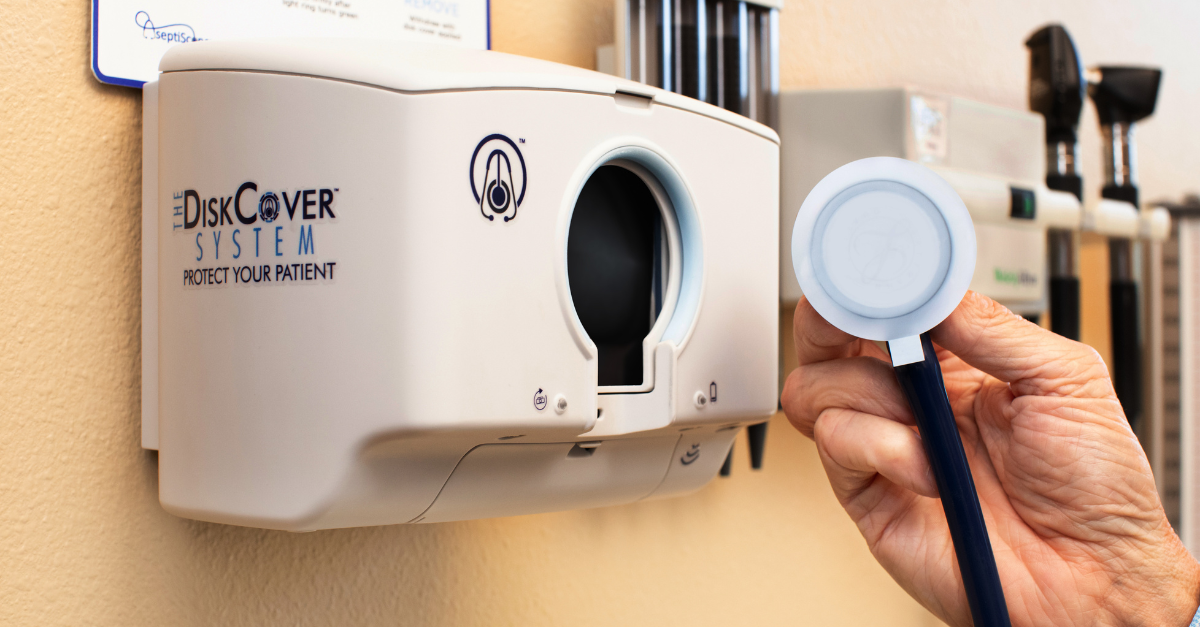
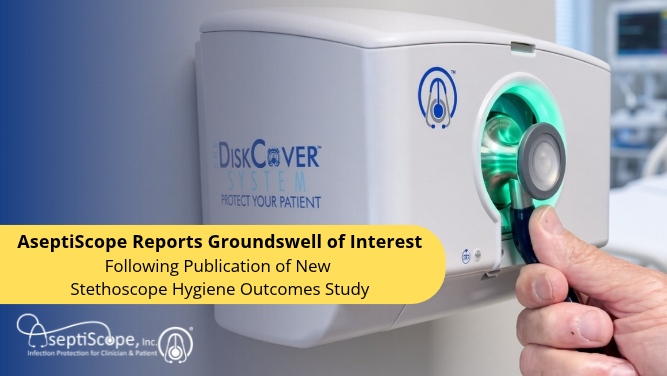
The DiskCover System is a wall-mounted, touch-free stethoscope hygiene system that applies single-use aseptic barriers to stethoscope diaphragms before patient assessments. It is designed to integrate into everyday clinical workflows as an additional protective measure.

About AseptiScope, Inc.

AseptiScope, Inc. develops patient safety technologies designed to address preventable pathogen exposure in healthcare through practical solutions that fit into routine clinical care.

Media Contact:

Anthony Pham

Investor Relations

apham@aseptiscope.com

858-382-8142

AseptiScope® Announces Publication Reporting an 84% Reduction in Life-Threatening Infections Following Integration of The DiskCover System®

AseptiScope® Announces Publication Reporting an 84% Reduction in Life-Threatening Infections Following Integration of The DiskCover System®

ICU nurses who became infection preventionists integrated The DiskCover System into a 48-month prevention bundle, finding it easy to use, well accepted, and effective in eliminating central line infections for more than a year of follow-up.

SAN DIEGO, Calif., October 1, 2026 — AseptiScope, Inc. today announced the publication of a peer-reviewed study in Critical Care Nurse reporting an 84% reduction in central line-associated bloodstream infection rates after implementation of a prevention bundle that included The DiskCover System® and chlorhexidine-impregnated dressings. Conducted at the Lt. Col. Luke Weathers, Jr. VA Medical Center, the four-year quality improvement initiative evaluated outcomes among 5,226 intensive care unit patients and was independently developed and implemented by the VA clinical team.

After implementation, bloodstream infection rates fell from 4.42 to 0.70 infections per 1,000 central catheter days, an 84% reduction. Rates later reached zero and remained there for periods exceeding one year.

Central line bloodstream infections are among the most serious healthcare-associated complications. The publication cites evidence that affected patients face more than three times the odds of acute mortality compared with uninfected patients.

“Decades of literature show that traditional between-patient stethoscope disinfection reduces contamination but does not reliably eliminate it,” said Scott Mader, Chief Executive Officer of AseptiScope, Inc. “The DiskCover System was engineered to provide an aseptic patient-contact surface every time, and 30 times faster than conventional alternatives. By offering a rapid, effective, and affordable solution, we hope to help healthcare providers close a persistent patient safety gap.”

The publication adds to growing evidence that stethoscopes can harbor pathogens similar to those found on clinicians’ hands and may contribute to cross-contamination between patients. Citing the difficulty of maintaining consistent stethoscope asepsis with conventional cleaning, the authors evaluated whether aseptic stethoscope barriers could strengthen infection prevention when paired with chlorhexidine-impregnated dressings.

Clinician acceptance was strong: 100% of surveyed users described the barrier as easy to use, and 81% preferred it to disposable stethoscopes.

“We are honored that the VA Medical Center team integrated The DiskCover System into its infection prevention strategy and shared its findings in a peer-reviewed publication,” added Scott Mader. “The most meaningful innovations improve patient outcomes while fitting naturally into everyday clinical practice.”

The findings underscore the potential of combining standardized central line care with aseptic stethoscope hygiene to protect some of healthcare’s most vulnerable patients from preventable bloodstream infections.

The publication marks another milestone for The DiskCover System within the VA healthcare community. In 2025, The Jesse Family Foundation recognized AseptiScope with the Dr. Robert L. Jesse Award for Innovation Demonstrated to Protect Veterans’ Health for The DiskCover System®.

Read the Study

Ragsdale N, Simpson W, Peacock WF. Using Stethoscope Hygiene Barriers to Reduce Central Catheter-Associated Bloodstream Infection Rates. Critical Care Nurse. 2026;46(5):61-66. doi:10.4037/ccn2026637.

About The DiskCover System®

The DiskCover System® is a touch-free stethoscope hygiene platform that automatically applies a new aseptic diaphragm barrier before each patient assessment, helping healthcare facilities standardize stethoscope hygiene while maintaining clinical workflow.

About AseptiScope, Inc.

AseptiScope, Inc. develops innovative patient safety technologies designed to reduce healthcare-associated infections through practical solutions that integrate seamlessly into clinical practice.

Experts Recommend New Stethoscope Hygiene Standards To Address Patient Safety Risk

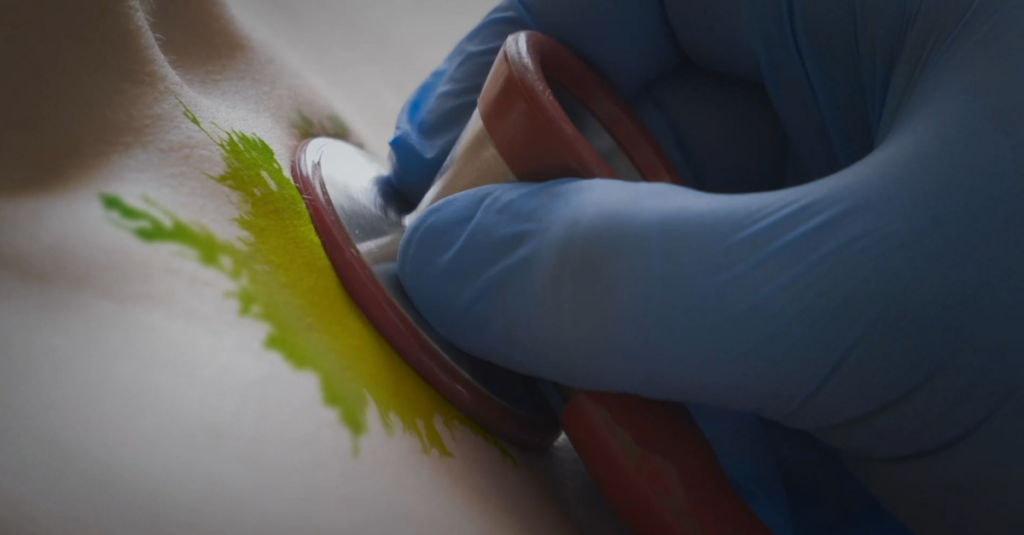
This image shows a clinician holding stethoscope whose diaphragm is protected by a disk cover barrier from The DiskCover System, the new stethoscope hygiene standard due to its efficacy and ease of use.
Effective stethoscope diaphragm barriers will elevate patient safety and protection from pathogens.

SAN DIEGO, Apr. 3, 2024 – Across time and around the world the symbol of healthcare, the stethoscope, remains the most commonly used medical device. Today’s publication in the Journal of Infection and Public Health¹ issues a clear message to the healthcare community.

“Our stethoscopes are like our third hand, they touch our patients in each assessment, but in the process they spread pathogens just as unwashed hands. The data is consistent and clear on this, and we’ve been ignoring it for too long,” says Dr. Frank Peacock, an emergency physician at Baylor College of Medicine and an author of today’s publication. He and coauthors conducted a review and analysis of research associated with the stethoscope’s ability to transmit the pathogens that are of greatest concern – Multi Drug Resistant Organisms (MDROs).

Although stethoscope contamination is not new to the healthcare community, the practice of stethoscope hygiene between patients has not been reinforced.  “Even when clinicians do take the time to clean their stethoscopes by wiping it down with alcohol, resistant pathogens such as MRSA and C. diff spores still persist on the stethoscope diaphragm,” says Dr. Abhay Dhand, referring to the part of the stethoscope that touches the patient. Dhand is a coauthor and infectious disease expert at Westchester Medical Center in New York.

A representation of the spread of pathogens from patient to patient by a stethoscope diaphragm.
MDROs persist on the stethoscope diaphragm even after cleaning with alcohol, causing concerns for pathogen transmission to other patients.

On the west coast of the US things are no different; “I’ve conducted these studies myself”, says Alpesh Amin, MD, Professor of Medicine and Hospital Medicine expert at the University of California, Irvine. “Cleaning takes time and technique, it is not consistently done, and it still won’t remove dangerous, resistant pathogens known as MDROs. Over decades now, studies show this as a failed strategy”, Amin stated.

The expert analysis also looked at results for “single-patient stethoscopes” that are disposable tools assigned to one patient. “These blunt tools have not improved patient safety, and most data supports they may do the opposite”, states Cynthia Cadwell, NP, CPHQ, a patients safety expert, and coauthor. “Studies have shown that these poor quality products cause over 10% misdiagnoses, including critical cardiac pathologies like heart murmurs. Most data support that disposable stethoscopes do not prevent transmission, force clinicians to share contaminated earbuds, and contribute to increased material waste. These items have no redeeming value for the patient, the clinician, nor the environment”, concludes Cadwell.

The authors note that several studies in recent years have noted unprecedented blocking of stethoscope transmission using a clean barrier that shields patients during exams, allowing clinicians to use their stethoscopes with no acoustic interference. “Placing a barrier between the stethoscope and the patient ultimately makes stethoscope exams touch-free, essentially placing a clean glove on our third hand”, quips Alpesh Amin, credited for the stethoscope nickname in his 2015 study titled “The Third Hand²”.

Down the road from Dr. Amin, Dr. Francesca Torriani serves as Program Director of Infection Prevention and Clinical Epidemiology at University of California, San Diego Health. She has researched and published on the new, touch-free technology that automatically applies a clean, medical grade barrier on stethoscopes in about a second, immediately prior to the patient exam.

The technology, called The DiskCover System, is now available in the United States, and is gaining popularity. “We are now integrating it into routine use in several units with good reviews”. UC San Diego has installed The DiskCover System in UCSDH units and clinics throughout the city by integrating it into hand hygiene stations. “We have integrated hand hygiene into everything we do, so placing The DiskCover System next to hand hygiene stations, the staff automatically uses it,” Dr. Torriani advised.

This image shows The DiskCover System, a new and effective medical device and method for stethoscope hygiene.
A New Stethoscope Hygiene Standard: With The DiskCover System’s aseptic barriers, stethoscopes are now touch-free.

A new return-on-investment (ROI) analysis³ shows the touch-free, barrier technology, The DiskCover System, may save hospitals up to $5M annually. In a related move the CDC recently announced their new 2024 Guideline to Prevent Transmission of Pathogens in Healthcare Settings, replacing their antiquated old guidelines. The draft framework, now posted on the CDC website, repositions stethoscopes as vectors that transmit pathogens through touch, and that hygiene should be conducted “prior to use with other patients”, much more aligned with today’s hand hygiene requirements regulated by patient care oversight groups such as The Joint Commission.

The experts’ conclusions are that, based on the data, “the use of a practitioner’s personal stethoscope with a disposable diaphragm barrier should be considered as a significant improvement in patient safety… and considered as a potential new standard for all patient contacts.”

References:

  1. Stethoscope Barriers Narrative Review; It’s Time for a Strategy Unfriendly to Multi-Drug Resistant Organisms (MDROs) – ScienceDirect
  2. The Third Hand: Low Rates of Stethoscope Hygiene on General Medical Services (mdedge.com)
  3. Peacock WF. The Hidden Expense of Stethoscope Hygiene vs the Real Costs of Failure. Clin Exp Emerg Med. 2024 Jan 11. doi: 10.15441/ceem.23.161. Epub ahead of print. PMID: 38204157.