Nursing Experts Across the U.S. Convene in San Diego, Bringing Stethoscope Hygiene into Focus and Spotlight Life‑Saving Innovation

FOR IMMEDIATE RELEASE

San Diego, CA — March 13, 2026 — AseptiScope®, the pioneer of automated, touch‑free stethoscope hygiene technology, announced today that Clinical Nurse Specialists (CNSs) from across the United States gathered this week in San Diego for the 2026 National Association of Clinical Nurse Specialists (NACNS) Annual Conference. The plenary sessions featured important discussions around patient safety and infection prevention, including a critical focus on the overlooked but widespread problem of stethoscope contamination, and highlighted breakthrough innovations that improve patient safety, outcomes, and hospital operational performance.

During the event, CNSs, known for driving evidence‑based practice and championing clinical excellence nationally, explored how automated hygiene technologies like The DiskCover® System are helping health systems reduce infections, remove human factors errors, strengthen compliance, and elevate patient safety standards.


Why Stethoscope Hygiene Is a National Focus

Because stethoscopes are used in thousands of patient encounters per day, it is not surprising that the diaphragm, the point of patient contact, is established to be as contaminated as unwashed hands. What is surprising is that disinfecting between patients is rarely done, and almost never fully effective. With mounting concerns around healthcare‑associated infections (HAIs), CNSs recognize the urgent need for practical, scalable solutions that protect both patients and clinicians without slowing workflows.

The DiskCover System, an automated, touch‑free, single‑use stethoscope barrier dispenser, addresses this gap by ensuring a clean patient contact for the first time.
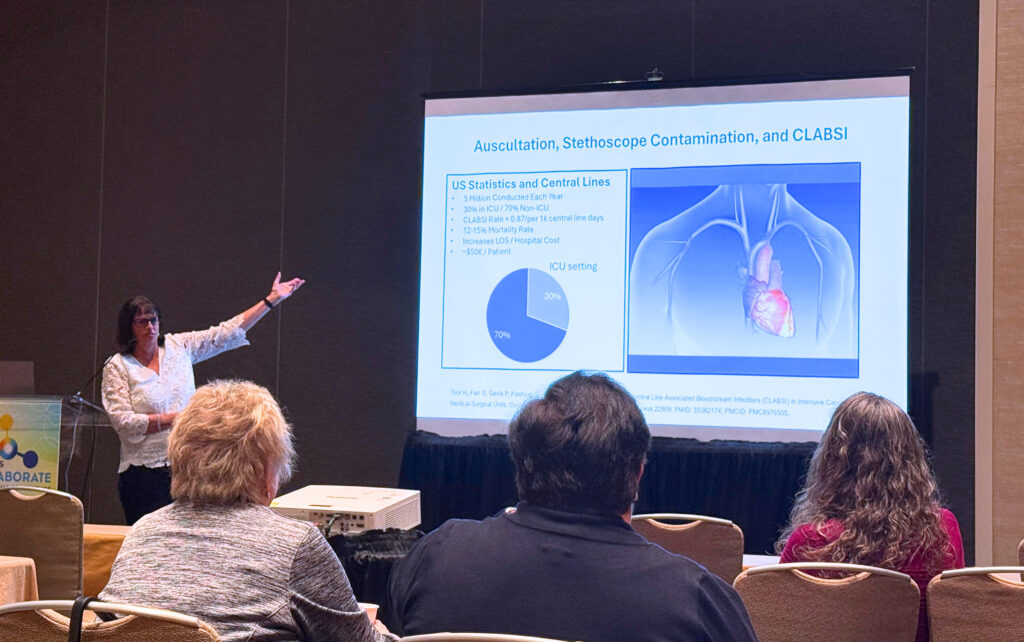
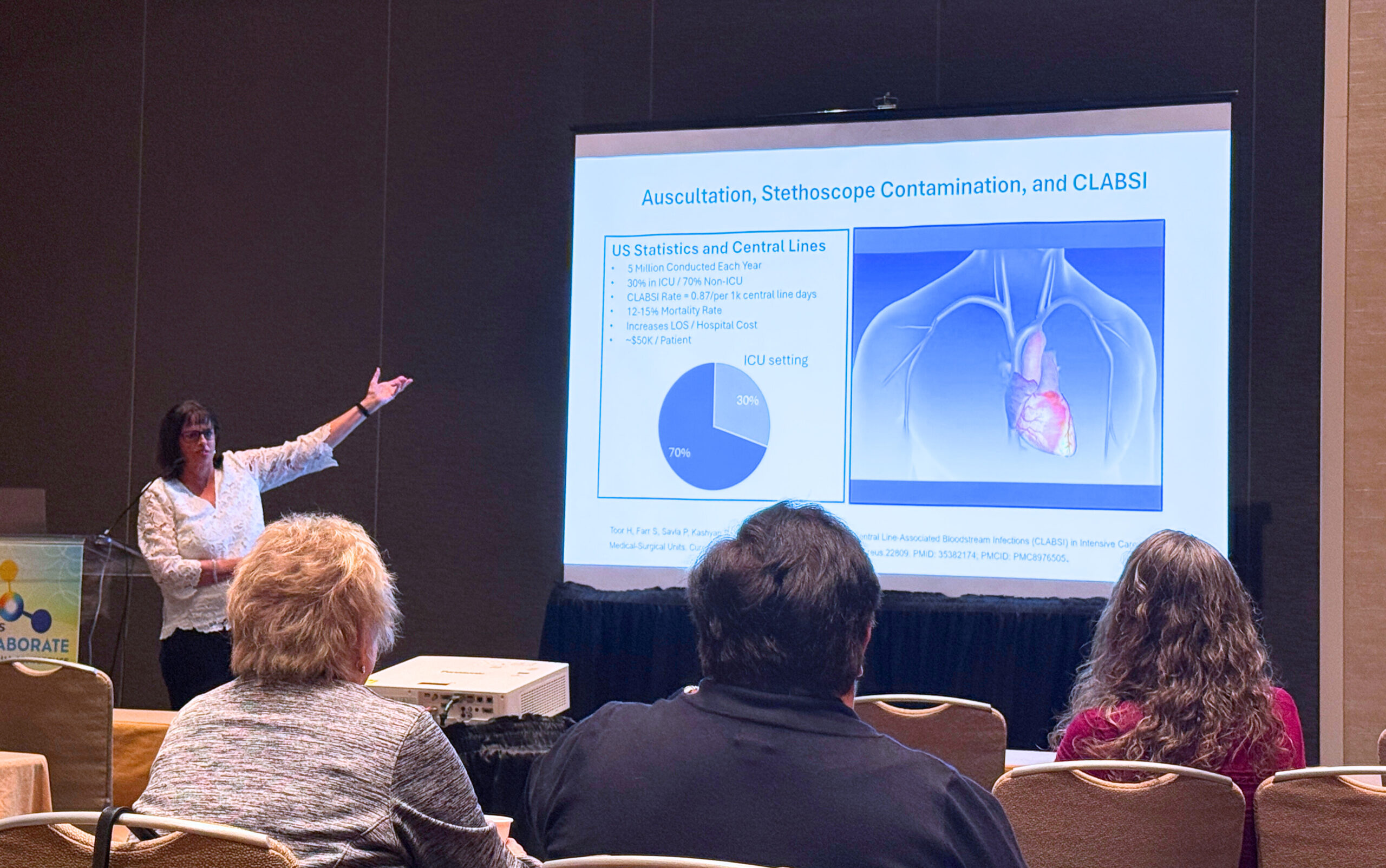
Kathleen Vollman, MSN, RN, CCNS, FCCM, FCNS, FAAN, who was awarded the 2026 NACNS President’s Award and named CNS of the Year in 2018, discusses the impact of stethoscope contamination.

CNS Perspectives: Real Voices from the Experts

“A solution that combines unparalleled efficacy with exceptional feasibility, making it easy for busy clinicians to do the right thing”

“The stethoscope has been a problem without a solution for a long time, and we finally have a solution that combines unparalleled efficacy with exceptional feasibility, making it easy for clinicians to do the right thing. Tools like this are elegant in their simplicity and advance healthcare efficiency and patient safety at a new level.”
Kathleen Vollman, MSN, RN, CCNS, FCCM, FCNS, FAAN

“A must-have solution in every healthcare facility where clinicians assess immunocompromised patients”

“This is quite simply a ‘must-have’ solution in every Health Care facility where clinicians assess immunocompromised patients with their stethoscopes, AKA: ‘The Clinician’s 3rd hand.’ As the latest CDC guidance recommends, stethoscope hygiene must occur between patients, just like hand hygiene. This is patient safety 101, essentially a no brainer!”
Cynthia Cadwell, ANP-BC, CNS, CPHQ

Innovation Proven to Save Lives and Reduce Costs

Hospitals adopting The DiskCover System have reported substantial improvements in stethoscope hygiene compliance, with significant downstream reductions in infection risk. In customer ICUs, adoption of the technology led to an 84% reduction in central line–associated bloodstream infections (CLABSI) after integration into policy and practice.

With each CLABSI costing hospitals tens of thousands of dollars in avoidable expense, not to mention the clinical impact, CNSs increasingly view stethoscope hygiene as a high‑value target for quality improvement.

AseptiScope Statement

“Clinical Nurse Specialists are essential change agents in patient safety, and its clear stethoscopes are undermining patient safety every single day,” said Scott Mader, CEO of AseptiScope. “The first evidence based policy and procedure for stethoscope hygiene is co-authored by these experts for integration into care, and it is exciting that patients will soon be safer when they seek care.”

About Clinical Nurse Specialists (CNS)

Clinical Nurse Specialists (CNSs) are advanced practice registered nurses (APRNs) who combine deep clinical expertise with system-level leadership. They are often described as “the clinical engine that drives quality,” because their work spans three impact spheres: patients, nurses/staff, and the health‑care system.


About AseptiScope®

AseptiScope is a San Diego–based medical technology company dedicated to advancing patient safety through innovative infection‑prevention solutions. Its flagship product, The DiskCover® System, is the first automated, touch‑free stethoscope barrier system designed to ensure sterility at every patient encounter.

Learn more at www.aseptiscope.com.

Media Contact

Name: Anthony Pham
Title: Market Development Director
Email: apham@aseptiscope.com
Phone: (858) 382-8142
Website: www.aseptiscope.com
As guidelines elevate stethoscope hygiene requirements, new technology may resolve pathogen transmission via touch

Thu, Apr 18, 2024, 12:01 PM PDT

Aseptiscope’s DiskCover® System can help healthcare providers meet the new guidelines from the US CDC, which consider stethoscopes having the same level of risk as unwashed hands.

San Diego, California, April 18, 2024 (GLOBE NEWSWIRE) — AseptiScope®, a California-based, clinical innovation company, has introduced its patented DiskCover® System, a novel technology allowing stethoscopes to avoid direct contact with patients, similar to how gloves are used for clinicians’ hands. This allows clinicians and health facilities to meet the new 2024 guidelines from the US Centers for Disease Control and Prevention (CDC) that elevate concern with stethoscope transmission of pathogens through touch, the foundation of Healthcare Associated Infections (HAI).

The recently released CDC guidelines have reclassified the stethoscope as a major vector for pathogen transmission in healthcare settings, due to its frequent contact with patients, requiring hygiene between each patient, just as the clinician’s hands, which have the same level of contamination as the stethoscope diaphragm (that touches patients). Previously, the stethoscope was classified as a non-critical item, similar to bed railings and countertops, despite stethoscopes touching US patients more than 5 billion times per year.

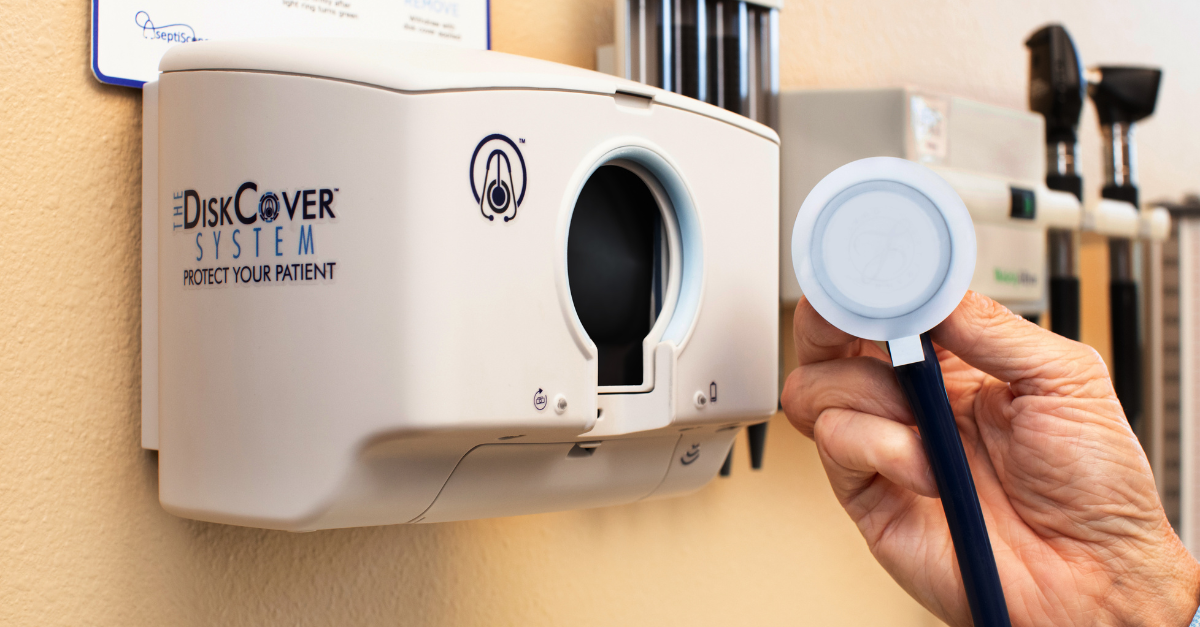
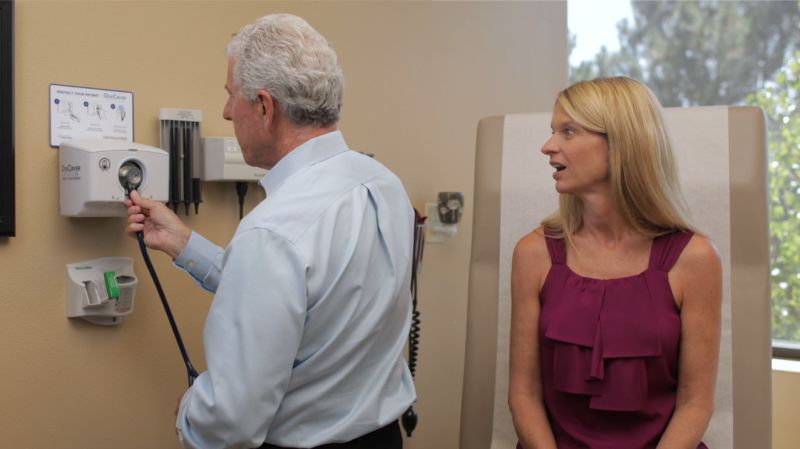
The DiskCover System uses a wall-mounted, motion-activated dispenser that is loaded with a Clean Cassette®. Each time the clinician wants to apply a cover on their stethoscope, they wave their hand under the dispenser and then place the stethoscope’s diaphragm into a window that applies a disk cover barrier, a totally clean, medical-grade barrier with high-fidelity acoustic performance. Each cassette maintains 420 disk covers in an aseptic (clean) environment until it is applied to a stethoscope. The entire application process takes less than two seconds and does not interrupt the clinician’s workflow.

Now available commercially from AseptiScope’s e-commerce site, the technology is already in use in those hospitals that proactively recognize its value to both healthcare and patients. Naomi Ragsdale, a nurse and infection control expert at the Memphis VA Medical Center,, identified this technology and led its integration into the intensive care setting. “The DiskCover System® has made stethoscope cleanliness uncomplicated and transparent for our ICU. We are able to monitor usage and have peace of mind knowing the compliance of our staff is on par with our hygiene goals which in turn decreases the risk for a hospital-acquired infection”, stated Ragsdale.

“Cancer patients are more susceptible to infection due to their course of treatment, and stethoscope exams are routine in patient assessment,” adds Gerardo Midence, MD, a cancer specialist at St. Joseph Cancer Center in Lewiston, Idaho. St. Joseph is the first to adopt the technology within Lifepoint Health, a national healthcare provider. “We evaluated The DiskCover System and found it to be useful, practical, and functional. Importantly, it makes stethoscope hygiene more reliable and timely.”

“I really see technology playing a huge role in our ability to resolve this challenge,” says Kathleen Vollman, a clinical nurse specialist and president of the World Federation of Critical Care Nurses. “The CDC now recognizes the stethoscope as a significant vector for disease transmission, and we need innovation that will make it easy for busy clinicians to do the right thing. Cleaning stethoscopes with alcohol between patients takes too long, can damage the stethoscope, and is ineffective against alcohol-resistant pathogens.”

AseptiScope CEO Scott Mader says that The DiskCover System is a product of an innovation methodology, called market-driven science. “We develop solutions based on identified clinical needs, and these are designed, vetted, and validated as evidence-based solutions that inherently resonate with providers. Clinicians have not only responded favorably to The DiskCover System, but have stated support for similar solutions for other vectors such as ultrasound probes, and even hands”, says Mader.

Media contact:

Name: Anthony Pham

Email: apham@aseptiscope.com

______________________________________________________________________________

Article from Yahoo! Finance: https://finance.yahoo.com/news/guidelines-elevate-stethoscope-hygiene-requirements-190100981.html?guccounter=1

Experts Recommend New Stethoscope Hygiene Standards To Address Patient Safety Risk

This image shows a clinician holding stethoscope whose diaphragm is protected by a disk cover barrier from The DiskCover System, the new stethoscope hygiene standard due to its efficacy and ease of use.
Effective stethoscope diaphragm barriers will elevate patient safety and protection from pathogens.

SAN DIEGO, Apr. 3, 2024 – Across time and around the world the symbol of healthcare, the stethoscope, remains the most commonly used medical device. Today’s publication in the Journal of Infection and Public Health¹ issues a clear message to the healthcare community.

Our stethoscopes are like our third hand, they touch our patients in each assessment, but in the process they spread pathogens just as unwashed hands. The data is consistent and clear on this, and we’ve been ignoring it for too long,” says Dr. Frank Peacock, an emergency physician at Baylor College of Medicine and an author of today’s publication. He and coauthors conducted a review and analysis of research associated with the stethoscope’s ability to transmit the pathogens that are of greatest concern – Multi Drug Resistant Organisms (MDROs).

Although stethoscope contamination is not new to the healthcare community, the practice of stethoscope hygiene between patients has not been reinforced.  “Even when clinicians do take the time to clean their stethoscopes by wiping it down with alcohol, resistant pathogens such as MRSA and C. diff spores still persist on the stethoscope diaphragm,” says Dr. Abhay Dhand, referring to the part of the stethoscope that touches the patient. Dhand is a coauthor and infectious disease expert at Westchester Medical Center in New York.

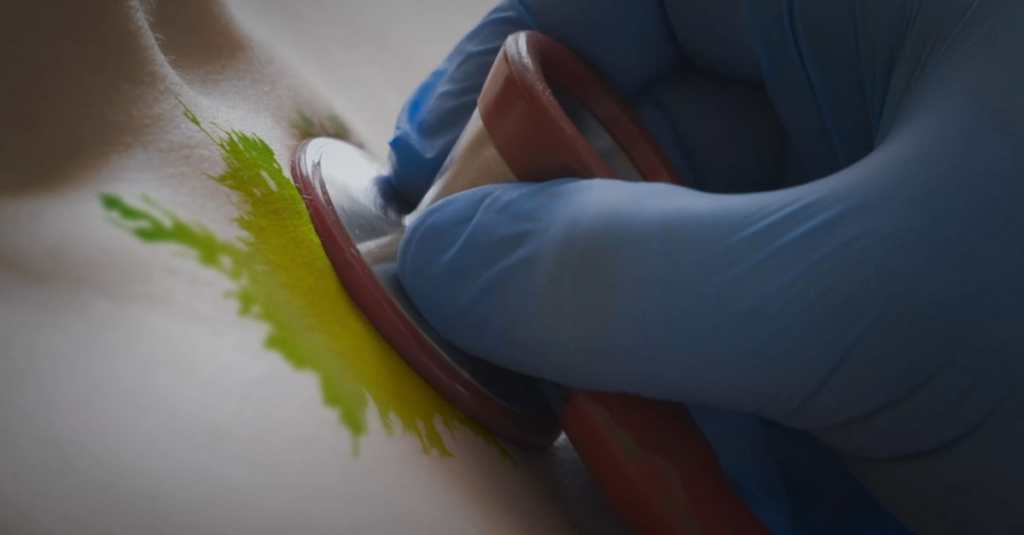
A representation of the spread of pathogens from patient to patient by a stethoscope diaphragm.
MDROs persist on the stethoscope diaphragm even after cleaning with alcohol, causing concerns for pathogen transmission to other patients.

On the west coast of the US things are no different; “I’ve conducted these studies myself”, says Alpesh Amin, MD, Professor of Medicine and Hospital Medicine expert at the University of California, Irvine. “Cleaning takes time and technique, it is not consistently done, and it still won’t remove dangerous, resistant pathogens known as MDROs. Over decades now, studies show this as a failed strategy”, Amin stated.

The expert analysis also looked at results for “single-patient stethoscopes” that are disposable tools assigned to one patient. “These blunt tools have not improved patient safety, and most data supports they may do the opposite”, states Cynthia Cadwell, NP, CPHQ, a patients safety expert, and coauthor. “Studies have shown that these poor quality products cause over 10% misdiagnoses, including critical cardiac pathologies like heart murmurs. Most data support that disposable stethoscopes do not prevent transmission, force clinicians to share contaminated earbuds, and contribute to increased material waste. These items have no redeeming value for the patient, the clinician, nor the environment”, concludes Cadwell.

The authors note that several studies in recent years have noted unprecedented blocking of stethoscope transmission using a clean barrier that shields patients during exams, allowing clinicians to use their stethoscopes with no acoustic interference. “Placing a barrier between the stethoscope and the patient ultimately makes stethoscope exams touch-free, essentially placing a clean glove on our third hand”, quips Alpesh Amin, credited for the stethoscope nickname in his 2015 study titled “The Third Hand²”.

Down the road from Dr. Amin, Dr. Francesca Torriani serves as Program Director of Infection Prevention and Clinical Epidemiology at University of California, San Diego Health. She has researched and published on the new, touch-free technology that automatically applies a clean, medical grade barrier on stethoscopes in about a second, immediately prior to the patient exam.

The technology, called The DiskCover System, is now available in the United States, and is gaining popularity. “We are now integrating it into routine use in several units with good reviews”. UC San Diego has installed The DiskCover System in UCSDH units and clinics throughout the city by integrating it into hand hygiene stations. “We have integrated hand hygiene into everything we do, so placing The DiskCover System next to hand hygiene stations, the staff automatically uses it,” Dr. Torriani advised.

This image shows The DiskCover System, a new and effective medical device and method for stethoscope hygiene.
A New Stethoscope Hygiene Standard: With The DiskCover System’s aseptic barriers, stethoscopes are now touch-free.

A new return-on-investment (ROI) analysis³ shows the touch-free, barrier technology, The DiskCover System, may save hospitals up to $5M annually. In a related move the CDC recently announced their new 2024 Guideline to Prevent Transmission of Pathogens in Healthcare Settings, replacing their antiquated old guidelines. The draft framework, now posted on the CDC website, repositions stethoscopes as vectors that transmit pathogens through touch, and that hygiene should be conducted “prior to use with other patients”, much more aligned with today’s hand hygiene requirements regulated by patient care oversight groups such as The Joint Commission.

The experts’ conclusions are that, based on the data, “the use of a practitioner’s personal stethoscope with a disposable diaphragm barrier should be considered as a significant improvement in patient safety… and considered as a potential new standard for all patient contacts.”

References:

  1. Stethoscope Barriers Narrative Review; It’s Time for a Strategy Unfriendly to Multi-Drug Resistant Organisms (MDROs) – ScienceDirect
  2. The Third Hand: Low Rates of Stethoscope Hygiene on General Medical Services (mdedge.com)
  3. Peacock WF. The Hidden Expense of Stethoscope Hygiene vs the Real Costs of Failure. Clin Exp Emerg Med. 2024 Jan 11. doi: 10.15441/ceem.23.161. Epub ahead of print. PMID: 38204157.